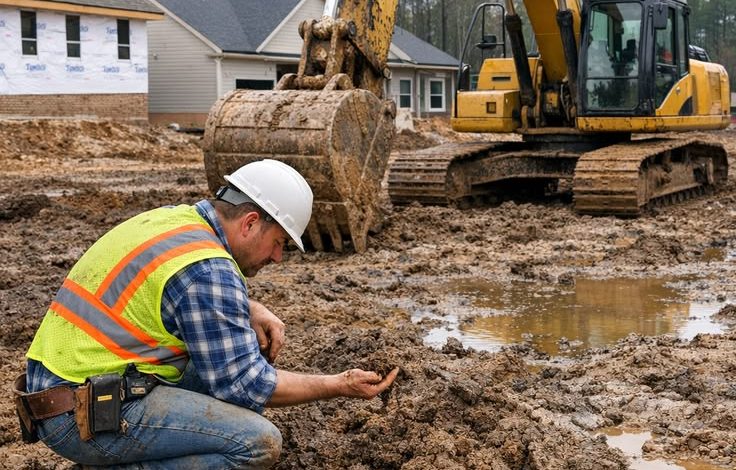
Before a building rises above the ground, some of the most important work happens underneath it. What looks like an ordinary patch of land from the surface can hide layers of loose soil, dense clay, rock, fill material or groundwater — all of which can influence how a project is designed and built.
That’s why understanding what’s below the surface is an important part of planning many construction projects. Site investigations may involve methods such as auger drilling to investigate subsurface conditions and obtain soil samples, helping relevant professionals develop a clearer picture of the ground before major construction begins.
Ignoring those conditions can be an expensive mistake. The ground ultimately has to support the structure above it, so unexpected conditions can affect everything from foundations and excavation to drainage, costs and construction schedules.
Soil Isn’t the Same Everywhere
It’s easy to think of the ground simply as “dirt”, but soil can vary significantly even across one property.
A site may contain combinations of clay, sand, gravel, silt, rock or previously placed fill. These materials behave differently when subjected to loads and changes in moisture.
Some soils may compress more readily under weight. Others can expand and contract as their moisture content changes. Fill material may also vary considerably depending on what was placed there and how it was compacted.
This is why assumptions based purely on what the site looks like can be misleading.
Foundations Depend on What’s Below Them
Foundations transfer loads from a building into the ground.
If the ground isn’t capable of supporting those loads appropriately, the structure may experience excessive or uneven movement. This can contribute to problems such as cracking, uneven floors and doors or windows that become difficult to operate.
Engineers can design different foundation systems to suit different site conditions.
A relatively straightforward site may require one approach, while challenging ground conditions could lead to deeper foundations, ground improvement or other engineering solutions.
The important part is having appropriate information before those decisions are made.
Groundwater Can Change the Job
Water below the surface can create its own set of challenges.
Groundwater may affect excavation, basement construction, drainage and the stability of excavated areas. If water enters an excavation unexpectedly, additional measures may be required to manage it safely and keep work progressing.
Conditions can also change with seasons and rainfall, meaning what appears dry during one site visit doesn’t necessarily tell the complete story.
Understanding potential groundwater conditions early allows the project team to consider appropriate management measures rather than discovering the problem after excavation has already begun.
Previous Land Use Can Leave Surprises
Not every construction site consists of untouched natural soil.
Properties that have previously contained buildings or industrial activities may have buried foundations, services, demolition material or areas of fill beneath the surface.
Even residential sites can contain unexpected features left behind by previous development.
Historical information about the property can therefore be useful alongside physical investigation. Old plans, previous reports and knowledge of earlier land uses may provide clues about what could be underground.
Where contamination is a potential concern, specialist environmental assessment may also be required.
Unexpected Ground Conditions Can Affect the Budget
Imagine excavation begins and contractors discover rock where relatively easy digging was expected.
Suddenly, different equipment may be needed. Excavation takes longer. Material disposal changes. Other trades may be delayed.
Alternatively, unexpectedly weak ground might require changes to the foundation design or additional ground preparation.
Any of these situations can increase costs.
Not every underground surprise can be eliminated, but appropriate investigation before construction can reduce uncertainty and help project teams develop more realistic budgets.
Spending money to understand the site may therefore prevent much larger unexpected costs later.
Ground Conditions Can Affect the Schedule Too
Construction programs often depend on one stage being completed before another can begin.
If excavation or foundation work takes significantly longer than expected, the delay can flow through the rest of the project. Concrete work may be rescheduled, trades may need to change dates and equipment hire periods could be extended.
This is particularly frustrating because the building may barely have started when the project is already falling behind.
Early site investigation gives designers and contractors more opportunity to plan around known challenges.
Different Projects Need Different Levels of Investigation
A small, lightweight structure and a large multi-storey building don’t necessarily require the same type or extent of ground investigation.
The appropriate approach depends on factors including:
- The size and type of structure
- Expected loads
- Local geology
- Site history
- Groundwater conditions
- Proposed excavation
- Applicable regulations and standards
- Consequences of ground movement
Qualified geotechnical and engineering professionals can determine what information is required for a particular project.
The aim isn’t to investigate every square metre of ground unnecessarily. It’s to gather enough reliable information to make informed design and construction decisions.
What You Can’t See Still Matters
It’s natural to focus on the visible parts of a construction project: the layout, materials, finishes and final appearance.
But a beautifully designed building still relies on the ground beneath it.
Understanding soil, rock, groundwater and previous site conditions can help engineers design suitable foundations, allow contractors to plan excavation and give owners a more realistic picture of potential costs.
You can’t remove every uncertainty from construction. Ground conditions can always contain surprises.
But discovering as much as practical before major work begins is usually far better than finding out what’s underground when the excavator is already on site and the project clock is ticking.