The Quiet Value of Privacy: Why Detached Homes in Nonthaburi Appeal to Long-Term Buyers

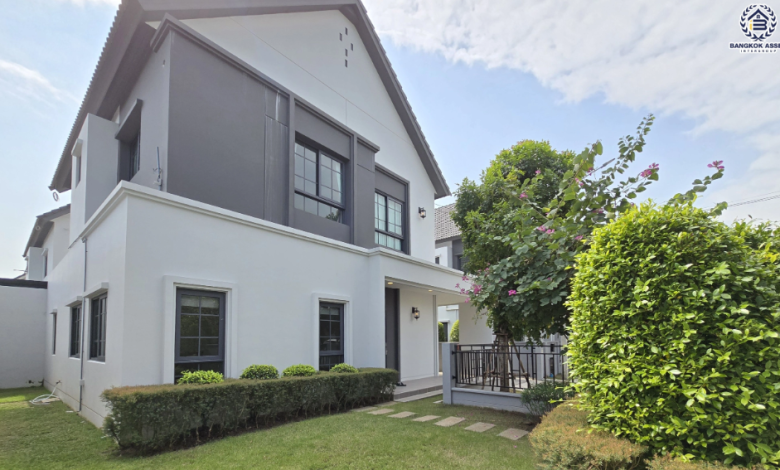
Privacy is easy to underestimate during a property viewing. Buyers often focus first on floor area, renovation quality, location, and price. Yet after years of living in the same place, the ability to close the gate, control noise, use outdoor space freely, and maintain a comfortable distance from neighbouring homes can become one of the property’s most valuable qualities.
This is one reason detached homes in Nonthaburi continue to attract long-term buyers. The province offers a broad mix of established residential areas, newer developments, and lower-density neighbourhoods where privacy is not treated as a luxury feature, but as part of everyday life. For families planning to remain in one home for many years, that quiet sense of independence can influence comfort more deeply than fashionable finishes or short-term market appeal.
Privacy Begins with the Space Between Homes
The most visible advantage of a detached house is separation. Unlike apartments or townhouses, the property does not usually share walls with neighbouring households. This physical distance reduces the transfer of everyday sounds, from conversations and television to children playing or furniture being moved.
The value becomes clearer when several family members follow different routines. One person may work late, another may wake early, while children study or play elsewhere in the house. Separation between rooms and between neighbouring properties allows these routines to coexist with less disruption.
Outdoor setbacks also matter. Even a modest strip of land beside the house can improve ventilation, bring more natural light into interior rooms, and create a buffer from nearby activity. A garden, side passage, or private terrace can offer a place to relax without feeling exposed to a shared corridor or common area.
Buyers should pay attention not only to plot size, but also to how the house sits within it. Windows facing directly into a neighbouring property, tightly positioned service areas, or limited boundary screening can reduce the sense of privacy even when the home is technically detached.
Long-Term Comfort Depends on Control Over Daily Life
Privacy is not simply about avoiding noise. It is also about control. Detached-home owners generally have more freedom to decide how they use their property, provided any changes comply with local regulations and community rules.
A spare room can become an office without affecting a shared living area. Outdoor space may be adapted for pets, gardening, exercise, or family gatherings. Parking can be managed within the property rather than negotiated with neighbours or limited by a shared building system.
This control becomes increasingly important as household needs change. A couple may begin with a simple lifestyle, then later need space for children, ageing parents, remote work, or regular visitors. A detached house can often absorb these changes more comfortably because activities can be distributed across different parts of the property.
For buyers comparing private family homes in Nonthaburi, it is worth considering how much independence each property provides in practice. Boundary walls, gate placement, room orientation, outdoor visibility, and the relationship with neighbouring houses all affect the experience of privacy.
The strongest properties allow residents to feel protected without feeling isolated. They create a clear personal territory while remaining connected to schools, shops, healthcare, and transport.
A Quiet Neighbourhood Is More Than a Quiet Street
A peaceful viewing does not always guarantee a peaceful home. Noise levels can change throughout the day, and buyers should observe the surrounding area during mornings, evenings, weekends, and school hours.
Traffic, nearby businesses, places of worship, construction, aircraft, pets, and community activity may all affect the neighbourhood atmosphere. Some sounds are occasional and manageable, while others become part of the daily environment.
Road layout also influences privacy. A house near the entrance of a development may experience more passing vehicles, visitors, and delivery traffic. A property at the end of a quiet internal street may feel more secluded, but could also be farther from security points or more difficult to access.
Neighbourhood density is another factor. Mature residential areas may have larger plots and more established landscaping, while newer developments may place homes closer together but offer controlled access and shared management. Neither arrangement is automatically better. Buyers need to decide whether they value open space, formal security, community activity, or a quieter degree of separation.
A truly private home depends on the interaction between the building and its surroundings. Thick walls and high fences cannot fully compensate for a location exposed to constant traffic or intrusive activity.
Privacy Can Strengthen a Home’s Long-Term Usefulness
Long-term buyers often think about adaptability, maintenance, and future resale. Privacy contributes to all three.
A house with well-positioned rooms and sufficient separation can be adapted more easily for multigenerational living. Older parents may occupy a quiet ground-floor room, while younger family members use upper floors. A home office can function without interrupting the household. Visitors can be received without opening every private part of the home.
These qualities also support renovation. Side space may allow windows to remain functional after internal alterations. Outdoor zones can be improved gradually without depending on shared-building approval. Landscaping can create additional screening and shade as the property matures.
From a resale perspective, privacy tends to remain relevant even as design trends change. Buyers may disagree about colours, materials, or decorative styles, but many continue to value quiet bedrooms, secure parking, usable outdoor space, and distance from neighbouring activity.
Maintenance must still be considered. Larger plots, gates, gardens, roofs, and external walls require attention. Yet for buyers who value autonomy, these responsibilities may feel reasonable because they are directly connected to a more controlled living environment.
Conclusion
The appeal of detached homes in Nonthaburi is not based only on extra land or larger interiors. For long-term buyers, privacy creates a quieter and more adaptable foundation for daily life.
It allows family members to follow different routines, gives owners greater control over how the property is used, and provides room for the household to change without immediately outgrowing the home. It also adds value that is difficult to reproduce through decoration alone.
A well-chosen property should be assessed from the inside out. Room placement, boundary conditions, neighbouring buildings, street activity, and local density all influence whether a house truly feels private.
Over time, this quiet value becomes increasingly visible. Privacy reduces friction, supports independence, and gives residents the freedom to make the home their own. For buyers planning to stay for many years, that sense of control may prove more enduring than any feature designed simply to impress on viewing day.